 Sunny Days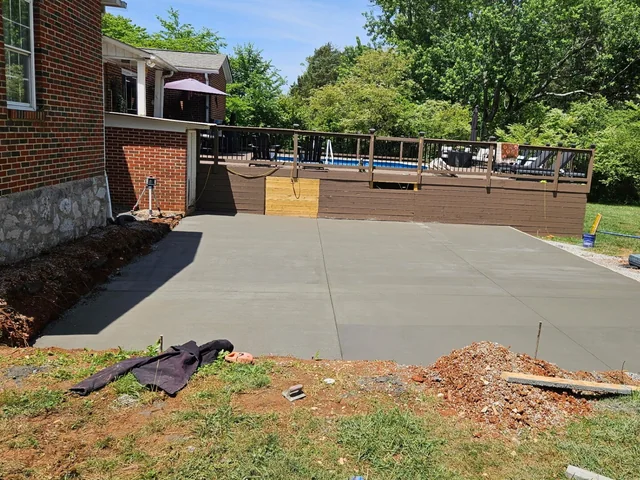
Driveways
The one surface that carries a two-ton load every day.
Poured, jointed and finished to take a vehicle, not just to look flat.
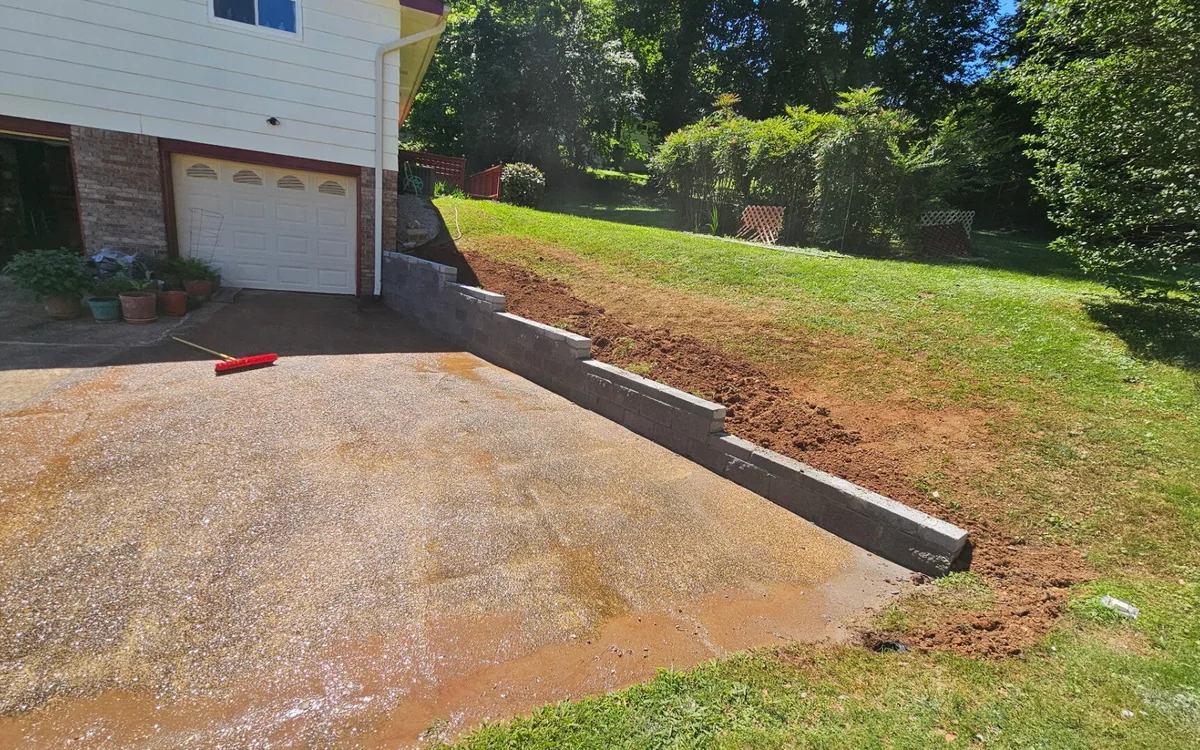
Almost every failed driveway failed underneath.
Concrete is strong in compression and weak in tension, which means a slab does not break because something heavy stood on it. It breaks because the ground under one part of it moved and the rest had to bridge the gap. That makes the subgrade, not the mix, the thing that decides how long a drive lasts.
The second thing is joints. Concrete shrinks as it cures and it is going to crack. Control joints decide where, cut straight and deep enough to actually work, in panels that are roughly square rather than long and thin.
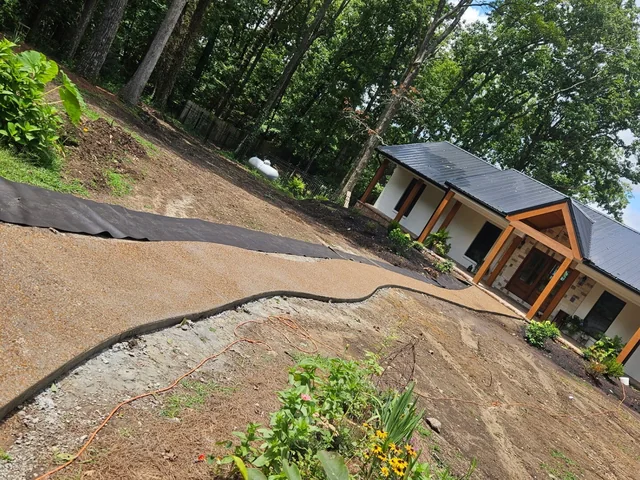
What goes into it
- Topsoil and anything soft taken out, then the base compacted in lifts
- Steel through the slab, sized to what is going to park on it
- Four inches for cars, thicker where a truck or a trailer turns
- Control joints cut in square panels, not in long strips
- Pitched to shed water away from the house and the garage
From dirt to driveway
Five stages. Most of them happen before any concrete arrives, which is why the quiet days at the start are the ones that matter.
- 01Strip and compactTopsoil, roots and anything spongy come out. What is left gets compacted, and soft spots get dug deeper rather than bridged.
- 02Form and gradeTimber forms set to the finished line and to the fall. This is where the shape of the drive and the way water leaves it get decided.
- 03Base and steelStone base where the ground needs it, then mesh or bar held up off the ground so it sits in the slab rather than under it.
- 04Pour and finishPlaced, screeded, floated, then the finish: broom for grip, trowel for smooth, stamp and color if that is the job.
- 05Joint and cureControl joints cut while the slab is green, then kept damp or sealed. Concrete gains strength by hydrating, and a slab that dries out fast is a slab that cracks early.
Patios
A back yard you can put furniture on.
Squared to the house, pitched away from it, edged so it holds.
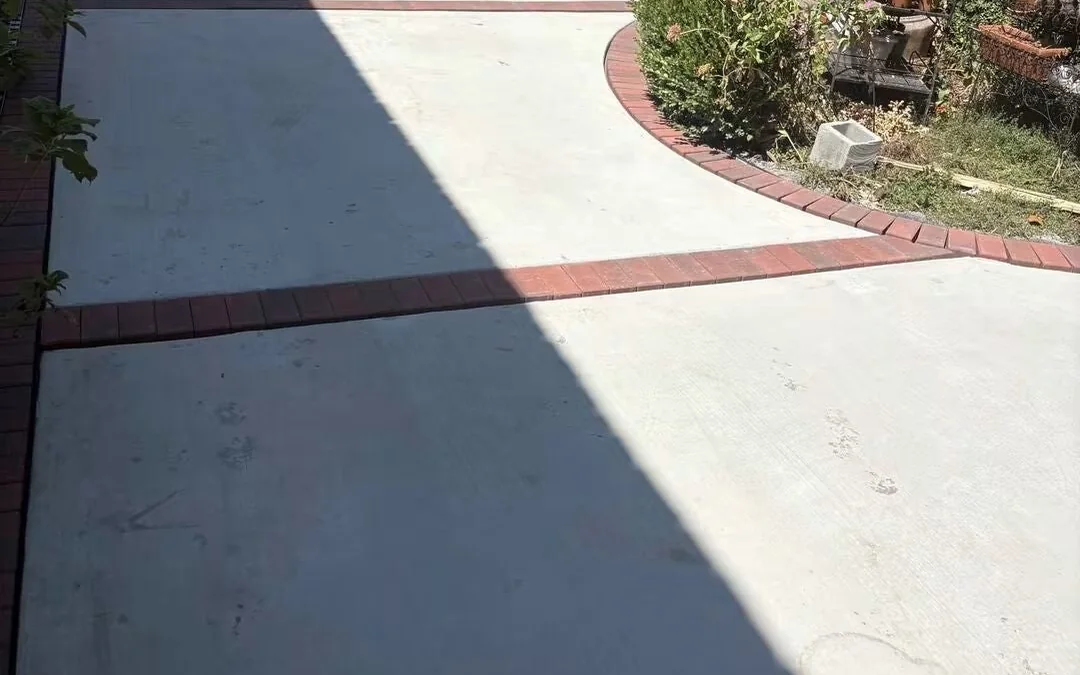
Size it around the furniture, not around the space that was free.
The most common thing wrong with a patio is that it is exactly as big as the gap between the house and the slope. Chairs pull back about two feet from a table, and if that runs off the edge then everyone sits with one leg on the grass and the patio quietly stops getting used.
The second thing is water. A patio against a house has to fall away from it, around a quarter inch per foot, and it has to stay below the siding and the door threshold. Get that wrong and the nicest surface in the garden is a channel pointing at the foundation.
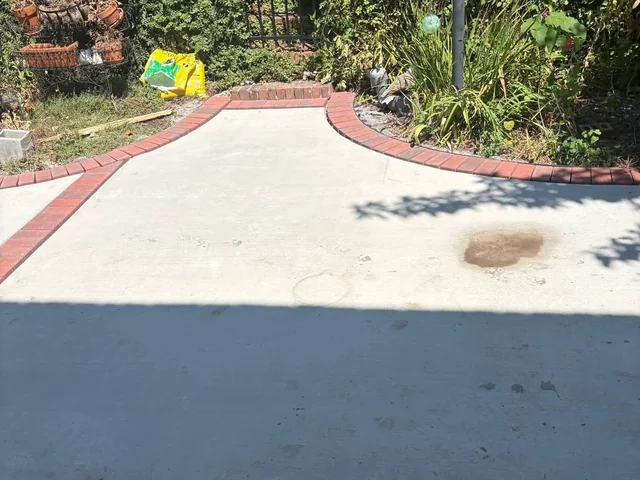
How it gets built
- Set out around how the space gets used, then squared to the house
- Falls run away from the building, never towards it
- Kept below the threshold and clear of the siding
- A brick band or a thickened edge so the perimeter holds its line
- Finished plain, stamped or colored, decided before the pour not after
What has to fit on it
Tick what the patio has to hold. This counts what you picked and says what it means for the visit. It does not produce a size or a price.
Walkways & Sidewalks
The path people actually take, poured where they take it.
Front walks, side runs and public sidewalk, residential and commercial.
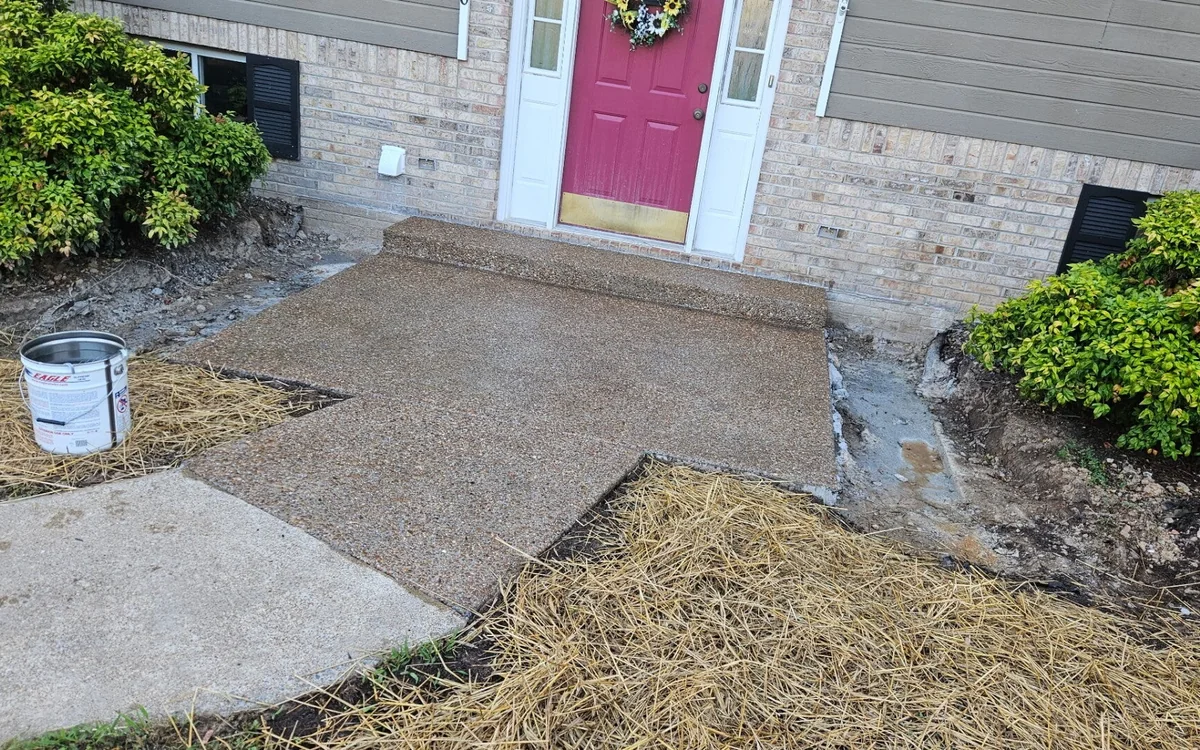
A walk is the one thing on a property everybody uses.
Which is why the failures matter more than the size suggests. A lip where two slabs meet is a trip hazard at the front door. A walk that holds water is ice in January. A walk that is too narrow means two people cannot arrive together, so one of them walks on the grass and kills it.
Three feet is a path one person uses. Four feet is a path two people use. That single foot is the difference between a front walk that works and one that is just a line of concrete.
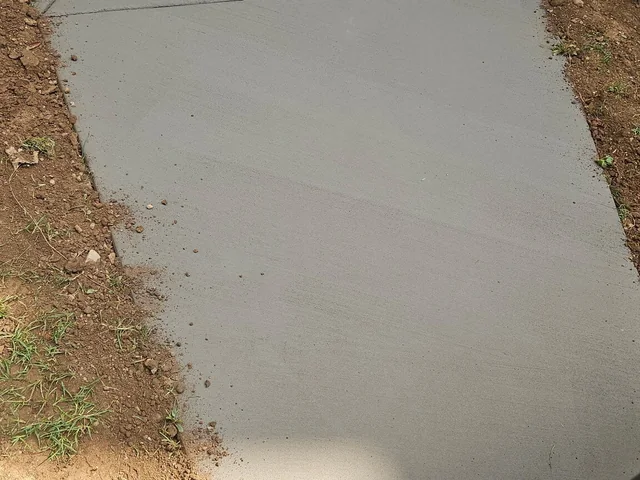
What gets decided before the pour
- Width set by how many people use it at once, not by what is cheapest
- Cross fall so water leaves the surface instead of standing on it
- A broom finish across the direction of travel, for grip when wet
- Joints at regular panels, and an isolation joint where it meets the house
- Landings level where a door swings over them
A walk at your door, and a walk the public uses
They are the same material and almost nothing else is the same. Both are in their photographs: the front walks on residential jobs, and the sidewalk, curb returns and ramp landings on commercial sites downtown.
Residential walk
- Width and route are yours to choose
- Curves, borders and color are all on the table
- Usually poured in one visit
- Still has to clear the door swing and the threshold
- Still needs a fall, or it ices over
Commercial sidewalk
- Built to a specified width, thickness and cross slope
- Ramp landings and detectable warning panels where it meets a crossing
- Jointing and finish usually set by the spec rather than by taste
- Inspection and sequencing dictate the program, not the weather
- Work often has to happen around a live site or an open storefront
Solid marks are the case for it, gray marks the cost of it. Both are real; which one wins depends on the property.
Slabs & Floors
Garage floors, shop floors, and the pad the shed goes on.
Flat, level, and thick enough for whatever is going to stand on it.
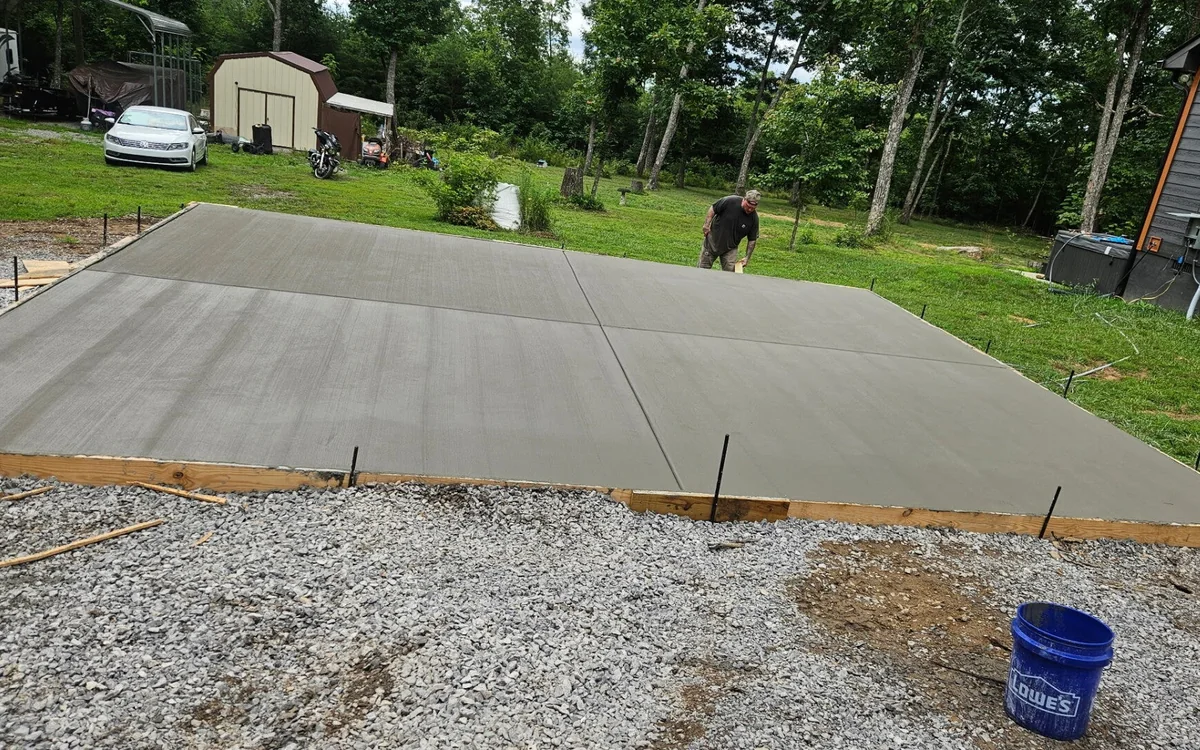
A slab is cheap to pour and expensive to pour twice.
A garage floor, a shop floor, a shed pad or a parking pad is the simplest thing on this site and the one where the decisions are least visible afterwards. Thickness, reinforcement and base are all buried the moment the concrete goes down, and none of them can be added later.
The question to settle first is not how big. It is what is going to stand on it, and what is going to drive onto it to get there.
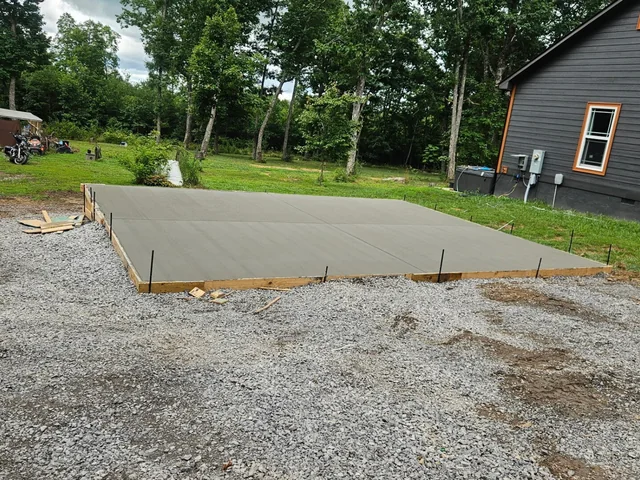
Decided before anything is poured
- Thickness set by the heaviest thing that will stand or turn on it
- Base compacted, with soft ground dug out rather than bridged
- Reinforcement held up in the slab, not lying on the ground under it
- Vapor barrier under anything that will be heated or finished inside
- Falls to a door, a drain or an edge, so water has somewhere to go
What holds a slab together
All three are real options and all three are used. The difference matters most once something cracks, because what the slab does next is decided here.
Welded wire mesh
- The usual answer for a residential slab
- Holds a crack tight once it has happened
- Quick to place over a large flat area
- Worthless if it ends up lying on the ground under the pour
- Has to be lifted onto chairs or pulled up as the concrete goes in
Rebar grid
- Stiffer, and the right answer where a truck or a trailer turns
- What footings and thickened edges get anyway
- Tied into a grid that stays where it is put
- More material and more labor
- Overkill under a shed or a patio
Fiber in the mix
- Controls the fine shrinkage cracking that happens as it cures
- Nothing to place, so nothing to place wrongly
- Not structural steel and not a substitute for it
- Can leave fine fibers visible on a troweled surface
Solid marks are the case for it, gray marks the cost of it. Both are real; which one wins depends on the property.
Questions
Questions people actually ask.
Driveways
Concrete or asphalt?
Concrete lasts longer, reflects heat instead of holding it, and takes color and pattern. Asphalt is cheaper to put down and easier to patch invisibly. On a steep Chattanooga driveway, concrete also gives better grip in ice.
How soon can I drive on it?
Foot traffic is usually a day or so, a car several days, a loaded truck longer. It depends on the mix and the weather, so it is a question to ask about your pour rather than to read off a page.
Will it crack?
Yes, eventually, and the joints are there to decide where. A crack that follows a joint is the slab working as designed. A crack that wanders across a panel is worth a phone call.
Can you pour over the old driveway?
Sometimes, if it is sound and the extra height does not foul the garage door or the street. If the old slab is moving, anything poured on top of it moves with it.
Patios
How big is big enough?
A four-seat table wants roughly 12ft by 12ft before someone is on the grass. Add for a grill run, for a walkway past the table, and for anywhere people stand rather than sit.
Can a patio go on a slope?
Yes, and on a Chattanooga lot it usually has to. The options are cutting into the bank with a retaining wall behind, or building the slab up on block. Both are in their photographs.
Does it need steel?
A patio carries people, not vehicles, so it is a lighter slab than a drive. It still wants steel or fiber, because what cracks a patio is the ground moving, and that does not care what is standing on top.
Can we extend it later?
Yes, but the joint between old and new will always be visible, and the new concrete will be a different shade until both have weathered. Pouring the full size now is cheaper per square foot and looks better.
Walkways & Sidewalks
How wide should a front walk be?
Four feet if you want two people side by side, which is what it feels like when someone is being shown to the door. Three feet is single file and reads as a service path.
Why the broom finish?
Grip. Brooming across the direction of travel gives the surface a texture that still works when it is wet. A troweled-smooth exterior walk looks good and is slick in rain.
Can an existing cracked walk be patched?
A single section can often be cut out and replaced. Whether that is the right answer depends on why it failed, which is on the repair page.
Do you do commercial sidewalk?
Yes. Their own photographs include storefront sidewalk, curb, entrance aprons, ramp landings and loading dock pads on sites in Chattanooga.
Slabs & Floors
How thick does a garage floor need to be?
Four inches covers cars. Six is the usual answer where a loaded truck, a trailer or a lift is going to sit, and it is far cheaper to add the two inches now than to pour the floor again.
Does a shed pad need to be reinforced?
It needs a compacted base more than it needs steel. A shed is light; what moves a shed pad is the ground under it, usually because the topsoil was never taken out.
Can you pour a slab in winter?
Yes, with the right precautions, and no on a frozen subgrade. Concrete placed on frozen ground sits on something that is going to shrink when it thaws.
Can it be stained or sealed afterwards?
A floor can be sealed or stained later, but the result depends on how it was finished and how clean it is. Decide before the pour if you want the best version of it.
The rest of the list
Concrete Flatwork
What you drive on, walk on and park on. Send photos of the space and someone will come and look at it.